Jonas Schröder · 21 October 2026
Downfield Artists Breathe New Life into Abandoned Warehouses Through Murals and Workshops
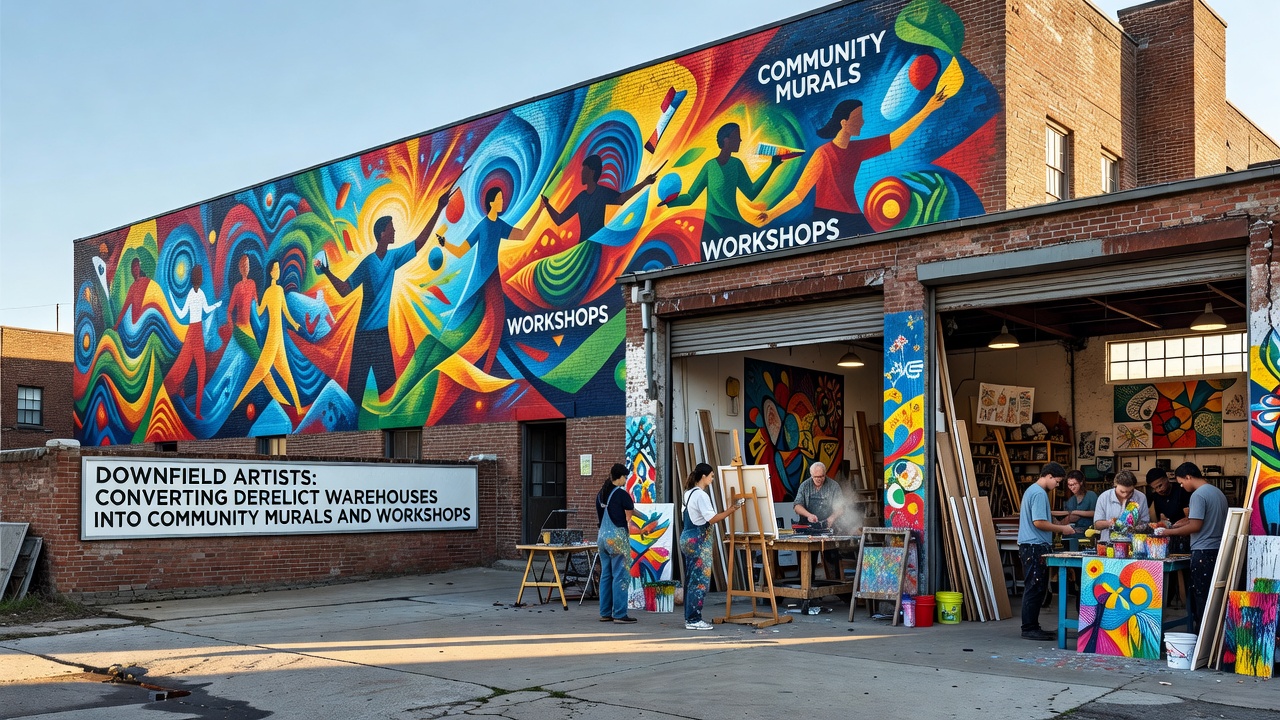
Downfield's industrial past left behind several large warehouses that stood empty for years, yet local artists began converting these structures into spaces filled with murals and hands-on workshops starting in early 2024. The projects focus on reusing existing buildings rather than new construction, and teams have documented each site through photographs and records that track changes from initial clearance to finished installations.
Local records show that five warehouses entered active conversion by mid-2025, with crews removing debris, reinforcing structural elements, and applying protective coatings before any artwork began. Artists coordinated with building owners to secure access agreements, and each location received basic utilities upgrades to support group activities without altering the original exteriors.
Project Background and Site Selection
Observers note that the warehouses chosen sit along former rail lines and near residential areas, which allowed easier access for residents once work started. Data from planning applications indicate that sites averaged between 800 and 1,200 square metres, providing enough wall space for multiple murals while leaving room for workshop tables and storage. Researchers at regional universities have tracked similar reuse patterns in other towns, where industrial buildings gained new functions through community-led efforts rather than commercial redevelopment.
Materials for the murals came from local suppliers, and crews selected weather-resistant paints and sealants that withstand the region's damp climate. Workshops began once the first walls were prepared, with sessions covering techniques such as stencilling, colour mixing, and large-scale composition.
Community Workshops and Participation
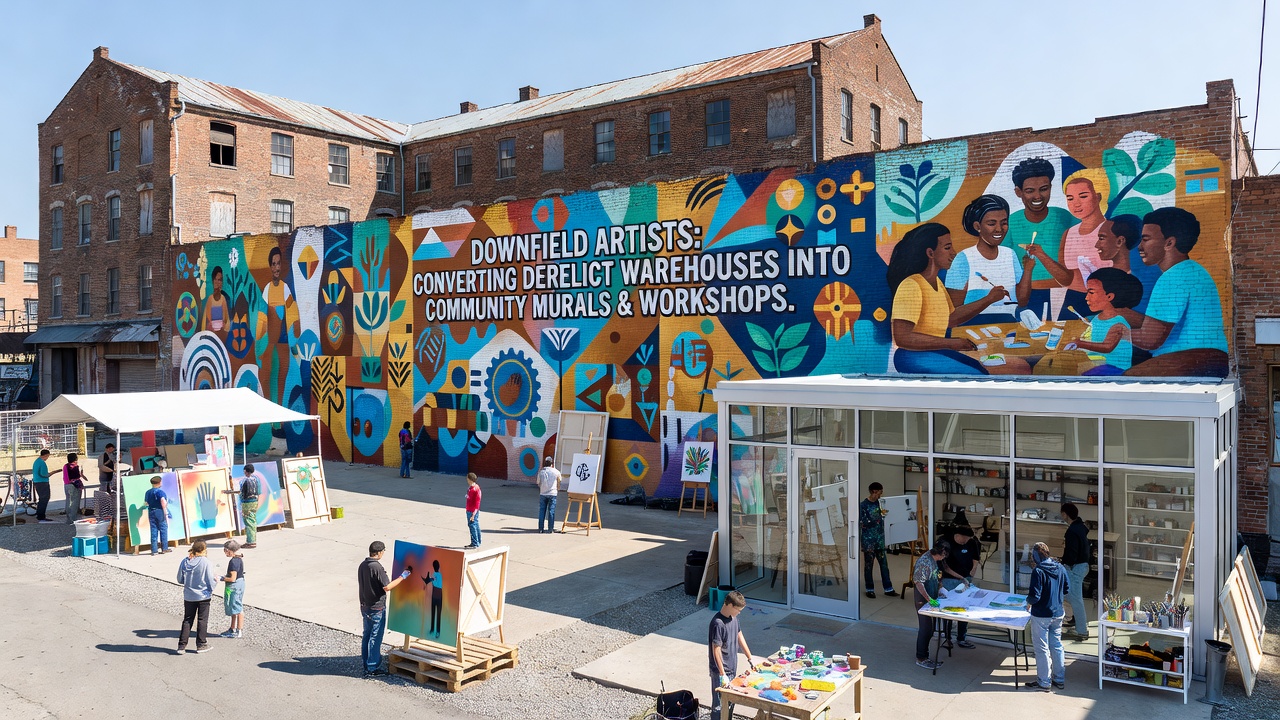
Workshop schedules run on weekends and weekday evenings, drawing participants from schools, senior centres, and neighbourhood groups. Attendance figures compiled by the organising collective show more than 2,400 people joined at least one session across the five sites during the first year of operation. Sessions last two to three hours, and instructors rotate to cover different skill levels so beginners and experienced painters work side by side.
One study from a European research network on cultural regeneration found that such programmes increase foot traffic in surrounding streets on workshop days, and Downfield organisers have recorded similar patterns through simple headcounts at entrances. Materials remain available between sessions, allowing individuals to return and continue pieces started during guided classes.
October 2026 Milestones and Planned Events
Organisers have scheduled an open weekend for October 2026 that will mark the completion of two additional warehouse conversions. The event will include guided tours of the new murals, live demonstrations of ongoing techniques, and short workshops open to drop-in visitors. Planning documents list temporary lighting installations and signage to guide attendees between sites, all of which will be removed after the weekend concludes.
Records from previous open days show steady increases in attendance when multiple locations operate simultaneously, and the 2026 programme will extend hours into the evening to accommodate work schedules. A report published by the National Endowment for the Arts on community arts infrastructure notes that multi-site events tend to draw wider regional audiences when clear transport information is provided in advance.
Documentation and Ongoing Maintenance
Each completed mural receives a protective topcoat and a small plaque listing the artists and workshop contributors. Digital archives store high-resolution images and participant comments, creating a public record that can be updated as additional layers are added over time. Maintenance crews visit every three months to check sealant integrity and repair minor wear, with costs covered through small grants and material donations.
Those managing the sites have established a shared inventory system so leftover paints and tools move between locations rather than accumulating unused. This approach reduces waste and keeps supplies consistent across projects.
Conclusion
The warehouse conversions continue to expand as more buildings receive approval and new artist teams join the rotation. Records indicate steady growth in participant numbers and completed murals, while teh October 2026 open weekend represents the next scheduled point for public review of progress. The projects rely on documented agreements, material tracking, and regular maintenance schedules that keep the spaces functional for ongoing community use.