Petra Jenkins · 4 November 2026
Downfield's rail link talks intersect with heritage proposals to reshape commuter access and town identity
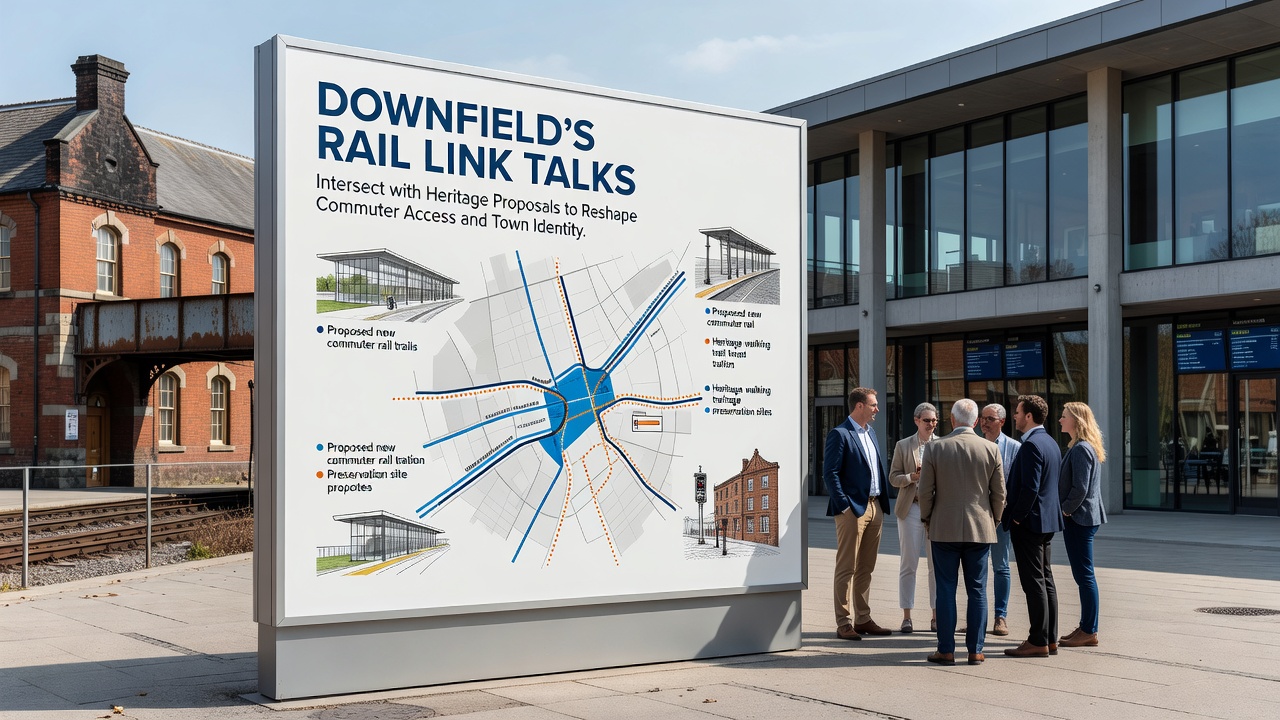
Discussions around new rail connections in Downfield have begun to overlap with heritage conservation plans, and this intersection shapes plans for improved commuter routes while preserving elements of the town's historical character. Local authorities and transport planners have scheduled key meetings in November 2026 to review route alignments that could link Downfield more directly to regional networks, and these alignments pass near several protected structures dating back to the 19th century.
Current rail proposals and commuter patterns
Transport data collected over the past five years shows that Downfield residents currently rely on bus services and a single-track line that connects to the main regional hub, with average daily commutes exceeding 45 minutes for many workers heading toward larger employment centers. Planners have examined options to extend double-track service and introduce a new station near the eastern edge of town, where preliminary surveys indicate potential capacity for 2,400 additional daily passengers once operational. Figures from regional transport reports reveal that similar extensions in comparable mid-sized towns have reduced average commute times by 18 percent within the first two years of service.
Heritage groups have submitted documentation listing 14 buildings and two former railway viaducts within 300 meters of the proposed alignments, and these groups argue that any construction must incorporate design standards that maintain visual continuity with existing brickwork and ironwork features. One study from the European Transport Research Institute examined comparable projects across the continent and found that integrating heritage requirements into rail planning added an average of 12 percent to initial costs but produced measurable increases in local tourism revenue after completion.
Heritage initiatives gaining momentum
Separate heritage proposals currently under review seek to designate a central conservation area that would cover the old market square and adjacent warehouse district, with guidelines that limit modern signage and require restoration of original facades on structures built before 1900. Community records indicate that these proposals emerged from a public consultation process involving 1,800 resident responses, where preservation of architectural details ranked as the top priority for 67 percent of participants. The intersection with rail plans becomes evident here because two of the proposed station sites sit directly adjacent to this potential conservation zone.
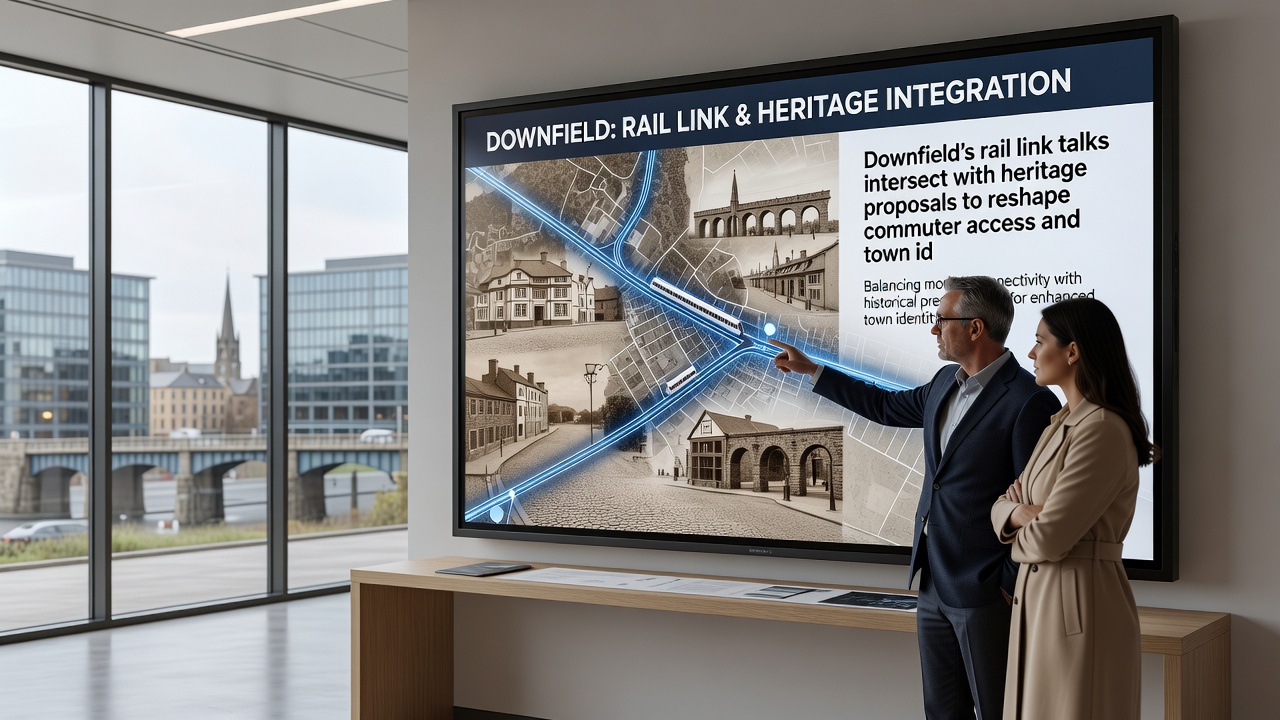
Engineers working on the rail project have presented preliminary designs that route platforms beneath existing viaducts rather than requiring their demolition, and these designs include interpretive panels that highlight the industrial history of the structures. According to documentation submitted to the planning department, such approaches have succeeded in other locations where new infrastructure was added without removing historic elements. The US Federal Railroad Administration has published case studies on similar adaptive reuse projects that demonstrate how heritage integration can maintain structural integrity while meeting modern safety codes.
Impact on town identity and access
Residents and business owners have noted that improved rail access could bring more visitors to the heritage sites already drawing small but steady crowds, particularly on weekends when walking tours operate through the old warehouse district. At the same time, the conservation area plans would restrict certain commercial developments that some local retailers had considered along the main approach roads. Data compiled by the Downfield Chamber of Commerce shows retail footfall increased 9 percent during periods when heritage events coincided with temporary rail service improvements last year.
November 2026 meetings are expected to address specific questions about noise mitigation near heritage buildings and the placement of overhead electrification equipment that could affect sightlines from the market square. Planners have already modeled several scenarios using 3D visualizations, and these models allow direct comparison of visual impacts under different route options. UNESCO heritage guidelines, referenced in local submissions, emphasize that new transport infrastructure should enhance rather than dominate historic settings when possible.
Next steps in the planning process
Technical assessments continue through the summer months ahead of the November 2026 sessions, with geotechnical surveys scheduled along the corridor and heritage impact assessments due for completion by October. Funding discussions involve contributions from regional transport authorities and potential heritage grants administered through national programs. Observers note that the combined timeline could see construction begin as early as 2028 if agreements are reached on the overlapping requirements.
Stakeholders from both the rail and heritage sides have formed a joint working group that meets monthly, and this group reviews technical drawings alongside conservation reports to identify points of compatibility early. The process reflects patterns seen in other regions where transport upgrades and historic preservation have been coordinated rather than treated as competing priorities.
Conclusion
The overlap between rail link proposals and heritage conservation efforts in Downfield presents a coordinated approach to updating commuter infrastructure while retaining elements of the town's historical fabric. Ongoing assessments and the scheduled November 2026 discussions will determine how these elements combine in final designs, with decisions likely to influence both daily travel patterns and the visual character of key areas for years ahead.